

Coordinating Bathrooms Across the Home
Bathrooms are often designed individually, approached as separate projects with little connection between them. But when considered together, they can help create a home that feels more balanced, cohesive and better suited to everyday living.
From family bathrooms and ensuites to downstairs cloakrooms, a coordinated approach allows each space to have its own function and character while still feeling connected to the wider home.
At Gardiner Haskins Interiors, we regularly help homeowners plan multiple bathroom spaces together, considering not just individual layouts and finishes, but how each room works as part of a complete interior scheme.
Why Coordinate Multiple Bathrooms into One Project?
Designing bathrooms together creates a stronger sense of flow throughout the home.
This doesn’t mean every room needs to look identical. Instead, it’s about introducing consistency through materials, finishes, lighting or colour palettes, helping the spaces feel naturally connected.
A family bathroom may need to prioritise practicality and storage, while an ensuite focuses more on calm and comfort. A downstairs cloakroom may become more expressive or design-led. When approached together, each room can still feel individual while contributing to a more cohesive overall result.
Creating Consistency Without Repetition
A coordinated bathroom scheme works best when there is balance between continuity and variation.
This could include:
Repeating similar brassware finishes throughout the home
Using complementary tile tones across different rooms
Maintaining consistency in cabinetry or worktop materials
Carrying lighting styles or mirror details between spaces
These smaller details help create a sense of continuity without making the rooms feel overly matched.
This approach also allows different bathrooms to respond to how they are used day to day, rather than forcing one design style across every space.


A main bathroom and en-suite bathroom completed for Claire & Aisha
Planning Bathrooms as Part of a Wider Project
Bathrooms are increasingly being renovated alongside kitchens, utility rooms and fitted bedrooms as part of wider home improvement projects.
Planning spaces together often allows for:
Better coordination of materials and finishes
More consistent design decisions
Improved storage planning
Greater consideration of lighting and layout
A smoother overall renovation process
This joined-up approach helps the home feel more resolved as a whole, rather than updated room by room over time.


A bathroom and kitchen completed by Gardiner Haskins Interiors for Gill.
Practical Design Considerations
While aesthetics are important, coordinated bathroom design also needs to support everyday function.
Storage requirements may vary between rooms, while plumbing layouts, ventilation and lighting all influence how each space performs. Considering these elements early in the design process helps ensure every bathroom feels practical as well as visually balanced.
It’s also worth thinking about longevity, choosing materials and layouts that will continue to work comfortably over time.
Designing Bathrooms Around Everyday Living
At Gardiner Haskins Interiors, our approach begins with understanding how each space will be used.
Our Bristol showroom brings together a wide range of bathroom displays, materials and finishes, helping homeowners visualise how different elements can work together across multiple rooms. From contemporary spaces to more classic schemes, our designers help shape bathrooms that feel cohesive, practical and tailored to the home as a whole.
Alongside design guidance, we also provide project management support, helping coordinate the process from initial planning through to installation.
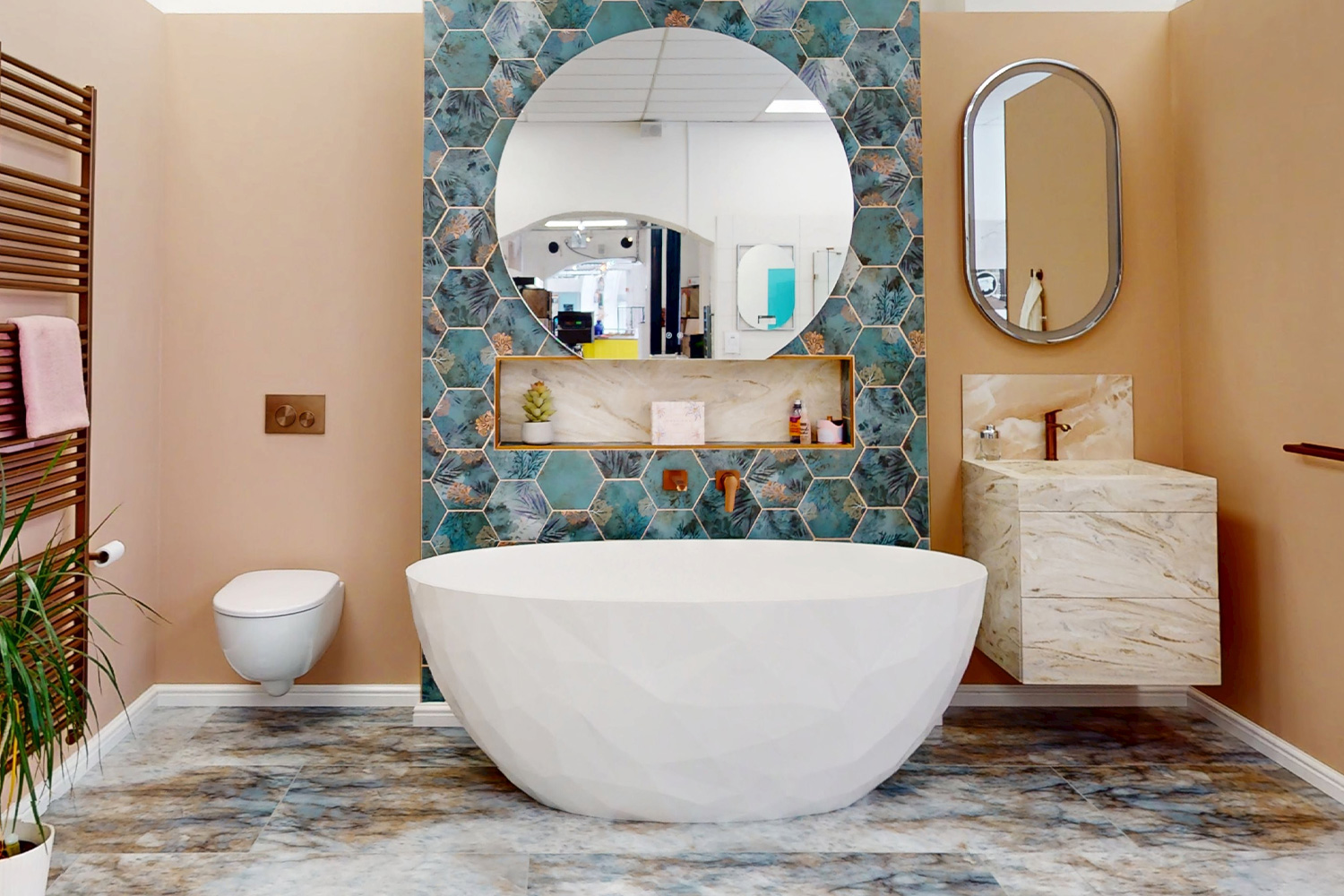 One of our many bathroom displays in our Bristol Bathroom Showroom.
Final Thoughts
Coordinating bathrooms across the home is about more than matching finishes. It’s about creating spaces that feel connected, considered and designed around how people live every day.
With the right approach, each bathroom can maintain its own character while contributing to a home that feels calmer, more cohesive and thoughtfully resolved.
FAQ
Should all bathrooms in a home match?
Bathrooms do not need to be identical to feel connected. The most cohesive homes usually balance consistency with individuality, using recurring materials, colours or finishes to create a sense of continuity while allowing each room to respond to its own purpose and layout. This approach often helps the home feel more considered and naturally balanced overall.
How can I create a cohesive look across multiple bathrooms?
Consistency in finishes, brassware, colour palettes and flooring can all help bathrooms feel visually connected throughout the home. Repeating certain design details while adapting layouts and storage to suit each space often creates a more refined overall result without making every room feel exactly the same.
Should ensuite bathrooms have the same style as the main bathroom?
Ensuite bathrooms often work best when they feel connected to the wider design of the home while still responding to how the space is used day to day. Many homeowners choose to carry through similar materials or finishes while introducing softer variations in colour, texture or layout to create a slightly more private and relaxed atmosphere.
What bathroom finishes work best throughout a home?
Finishes that feel timeless and adaptable often work particularly well across multiple bathrooms. Neutral tiles, brushed brassware, textured materials and natural tones can help create continuity while remaining flexible enough to suit different room sizes and lighting conditions. Durability and ease of maintenance are also worth considering, particularly in family homes.
Why is coordinated bathroom design important in larger renovation projects?
A coordinated approach helps bathrooms feel connected to the wider character of the home rather than designed in isolation. Considering layouts, materials, storage and lighting together often creates a calmer and more cohesive result, particularly in homes undergoing wider renovation or multi-room design projects.


