
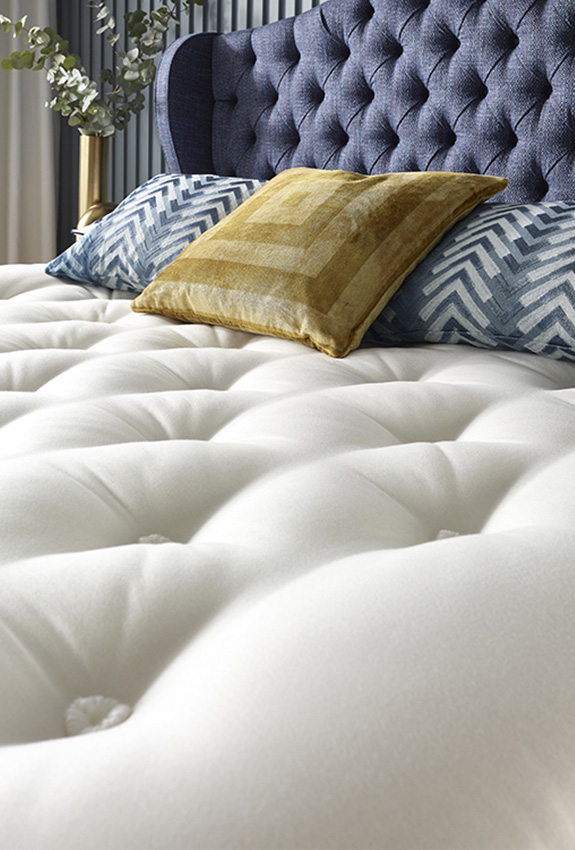
Harrison Spinks: How to Make an Emerald Mattress
Harrison Spinks on Inside the Factory – What We Learned
Did you catch Inside the Factory on BBC2 featuring Harrison Spinks?
We’ve always known there’s an incredible amount of craftsmanship behind every Harrison Spinks mattress, but seeing the full process from start to finish was genuinely eye-opening. From raw steel to finished bed, the level of detail, care and innovation involved is remarkable.
If you missed it, it’s well worth catching up.
Nearly 180 Years of Craftsmanship
Based in Leeds for almost 180 years, Harrison Spinks manufacture around 600 mattresses every 24 hours — yet much of the work is still done by hand. Each mattress is made up of more than 5,000 individual components, blending time-honoured techniques with modern engineering.
One of the most impressive things? Many of their materials are sourced locally — including wool from their own farm just 30 miles away.
From Steel Wire to Spring Perfection
The journey of a king-size Emerald mattress begins with 5mm steel. This is drawn through a 14-metre machine to produce fine 1.5mm wire, which is then formed into pocket springs.
Each individual spring uses around 120cm of wire, and more than 1,000 springs go into just the first layer of a king-size mattress — each produced in half a second. Smaller springs are inserted within certain rows to enhance comfort and support.
By the time comfort layers are added, the mattress contains more than 13,000 springs in total — all designed to respond independently to your body.
It’s this pocket spring technology, first patented in 1901 by James Marshall, that revolutionised mattress comfort. Unlike earlier designs where springs moved as one unit, pocket springs allow targeted support and reduced partner disturbance.
Natural Fillings with a Purpose
Beyond the springs, the natural fillings were a real highlight of the programme.
Hemp flax is used for its excellent moisture-wicking and odour-resistant properties, helping extend the mattress lifespan. Locally sourced wool from North of England Mule sheep provides temperature regulation, keeping you warm in winter and cool in summer, while also being naturally fire retardant.
The wool is washed, carefully processed into a soft, airy mesh and layered into the mattress before being secured in place.
Seeing the journey from sheep to finished mattress really underlined the brand’s commitment to sustainability and quality.
Handmade Finishing Touches
The woven ticking fabric is produced on site (around 10,000 metres each week) before borders, vents and handles are stitched on by hand. The mattress is then tufted using an 18-inch needle through multiple layers to secure everything firmly in place.
By the end of the process, a king-size Emerald mattress weighs around 68kg and has taken nearly four hours to complete.
As Gregg Wallace famously remarked on the programme:
“It’s easier to get a space rocket to the moon than to make one of your mattresses.”
It might be a slight exaggeration — but only just.
Why It Matters
Understanding what goes into a mattress makes you appreciate just how important that final product is. We spend roughly a third of our lives in bed, so the craftsmanship, materials and engineering behind your mattress truly matter.
Seeing Harrison Spinks featured on national television simply reinforced what we already knew — exceptional quality doesn’t happen by accident.
If you’re curious about experiencing that level of comfort for yourself, you can explore our Harrison Spinks collection in our Bristol beds showroom and feel the difference first-hand.
Author
Karley Robbins
Published
August 21st, 2019
Read time
3 mins
Inspiration Tags
Article
Brands